


Prodigy Math: Kids Game
4.724.64K Reviews
App Specs
- Version
- 4.9.8
- Updated On
- License
- Free
- Downloads
- 5,000,000+
- Developer
- Prodigy Education Inc
- Categories
- Educational
- Platform
- Android, iOS
Screenshots




 Analysis by AppCompare
When a child resists a page of sums but happily returns to a game, I can see why Prodigy Math: Kids Game appeals to families: it puts math practice inside a fantasy adventure. I’d treat it as a way to make extra practice more inviting, not as a replacement for teaching or a guarantee that every skill will click. Whether it works well depends on the child’s appetite for quests and how an adult fits play into a sensible routine.
A practical rhythm for everyday play
The most useful way I’d introduce Prodigy is as a short, repeatable activity rather than an open-ended screen-time reward. For example, after homework, a child could play for a planned stretch and then tell me about one question that felt easy and one that took thought. That small conversation makes the activity easier to connect to schoolwork without turning every session into a test.
At the start, I’d sit nearby long enough to see whether the child understands how answering questions connects to the adventure. Once that link is clear, they can play more independently, while an adult checks in occasionally. If a child rushes through answers to get back to the action, I’d slow the routine down: ask them to explain one solution aloud instead of adding more playtime as a reward for speed.
This approach is especially useful for a child who needs regular practice but loses interest in worksheets. It is less suitable when the immediate goal is a quiet, direct lesson on one specific procedure. In that case, a parent or teacher may get better results by explaining the skill first and using a game afterward as supplementary practice.
The Magical World of Prodigy Math
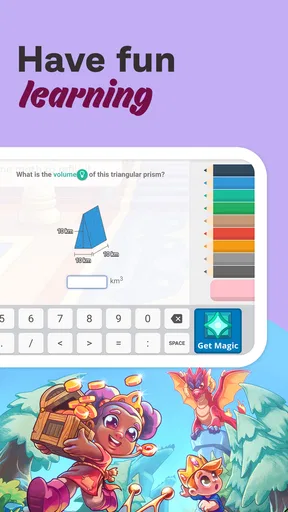
Imagine a world where math problems unlock magical powers and adventures. That's exactly what Prodigy Math: Kids Game offers. As soon as you open the app, you're greeted with a colorful, mystical world that instantly captivates the imagination. It's like stepping into a fantasy realm where solving math problems is the key to unlocking magical abilities.
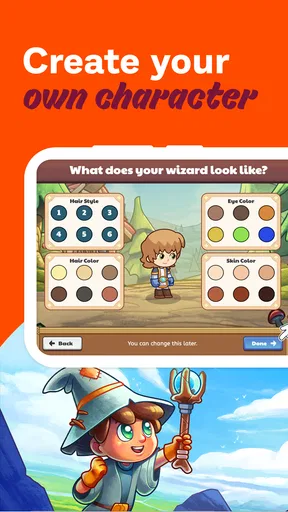
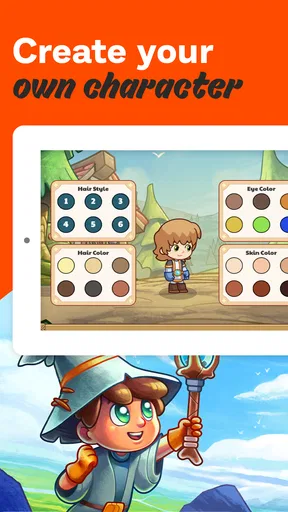
Kids create their own characters and embark on quests, battling creatures and overcoming obstacles by solving math equations. The game seamlessly integrates curriculum-aligned math content, making learning feel like a magical journey rather than a chore.
Gameplay and Features
The gameplay in Prodigy is designed to be intuitive and engaging. Kids can easily navigate their characters through different worlds, each filled with unique challenges and rewards. The app tailors math questions according to the player's grade level and proficiency, ensuring a customized learning experience.
Worth Reading Before You Choose

EA SPORTS FC Mobile 26 Is a Bigger Football Game, but It Takes Time

Flipboard Shows What News Apps Must Do Beyond the Feed

Switching to Android Auto Means Rethinking Your Driving Routine

Google Calendar Makes a Crowded Week Easier to Manage

Ludo King Makes the Most of the Minutes Between Plans

Baby Panda World Brings Quick Play to Modern Phones, but Its Game Library Feels Busy
One of the standout features is the real-time feedback and progress tracking. Both parents and teachers can monitor a child’s progress, identifying strengths and areas that need improvement. This feature is incredibly helpful for creating a personalized learning plan that adapts as the child progresses.
Moreover, the app includes multiplayer options, allowing kids to team up with friends or go head-to-head in math battles. This social aspect not only makes the game more fun but also encourages collaboration and healthy competition.
Settings and habits worth checking
Before handing over the device, I’d check the account and learning setup with the child’s adult. The game’s questions are tied to grade level and proficiency, so it’s worth confirming that the selected learning level matches what the child is studying. If the questions feel too easy, the adventure may hold attention while offering little useful challenge; if they feel persistently hard, frustration can overshadow the story. A quick check-in after a few sessions is more helpful than assuming the initial setup will suit every learner indefinitely.
I’d also agree on a stopping point before play begins. The quests and rewards can make “just one more” tempting, so a clear end cue—such as finishing the current activity and then putting the device away—helps keep the game in its place. Adults who use progress information should look for patterns to discuss with the child, rather than treating a dashboard as a complete picture of mathematical understanding. A child may answer correctly without being able to explain why, and a brief conversation can reveal that distinction.
Faster patterns without rushing the math
Experienced use is less about tapping faster and more about making each session purposeful. I’d encourage a child to pause on a problem they missed, read it carefully, and work through the reasoning before moving on. If the same kind of question keeps causing trouble, that is a useful signal to bring the topic to a parent or teacher, who can explain it in a different way. The game can prompt practice, but an adult’s explanation may be what turns repeated attempts into understanding.
Another helpful habit is to let the child choose a modest goal for a session, such as paying careful attention to the questions rather than trying to collect as many rewards as possible. Then ask what they learned or found tricky when they finish. This keeps the fantasy elements motivating without letting prizes become the only reason to play. In a busy household, that short reflection is easier to maintain than a complicated tracking routine.
Who it suits, and what it should not replace
Prodigy is a natural fit for children who enjoy character creation, fantasy settings, and game-like goals, particularly when they need encouragement to practise math. It can also give parents and teachers another way to make supplementary work feel less like a worksheet. A child who dislikes battling or prefers straightforward puzzles may not be drawn in by the adventure wrapper, though; I would let their reaction guide the choice rather than insist that every learner should enjoy the same format.
Compared with a worksheet, the game has a stronger sense of progression and can make practice feel more inviting, but a worksheet is often easier when an adult wants to focus on a narrowly defined set of examples. Compared with a simple math-drill app, Prodigy offers a broader fantasy-game experience, while a dedicated drill tool may be more direct for quick repetition. I see it as one option in a learning routine, not a universal winner: use the format that fits the child’s current need.
Why Kids Love It
It's no secret that kids love video games, and Prodigy Math taps into this passion by offering a game that’s both fun and educational. The graphics are vibrant, the characters are charming, and the storyline is captivating. Kids don't just learn math—they live it through their characters' adventures.
The app also offers a rewards system where players earn points and unlock new items as they progress. This incentive keeps kids motivated and eager to tackle more math problems, transforming learning into a rewarding experience.
Costs, access, and practical limits
The game is free to download, but it also includes in-app purchases, with listed items ranging from $4.95 to $199.95. I’d make the purchasing decision an adult’s responsibility and check the purchase controls on the device before a child plays. The free entry point makes it easy to try the core experience, but families should decide for themselves whether any paid option is worth considering rather than treating purchases as necessary for learning.
Prodigy Math is rated Everyone, and it is published by Prodigy Education Inc. Its current version is 4.9.8, with Android support listed from version 7.0 onward. Those details make compatibility worth checking before installing, especially on an older device. The game has a 4.7 average from around 64,000 ratings and more than 5 million installs, which suggests broad use, but popularity alone cannot tell me whether its style will suit a particular child.
There are also limits to what I’d expect from any game-based practice. A child’s progress in an adventure is not the same thing as a complete assessment of classroom skills, and game motivation can vary from week to week. If a learner needs focused help with a specific concept, direct instruction and carefully chosen practice may be more useful. I would use the game to support that work, not to diagnose a gap or replace a teacher’s guidance.
Benefits for Parents and Teachers
For parents and teachers, Prodigy offers peace of mind by blending fun with education. The comprehensive dashboard allows adults to track progress, set goals, and even assign specific tasks to ensure the child is on the right track.
Additionally, the app provides detailed reports that can be shared with teachers to supplement classroom learning. This seamless integration between home and school makes Prodigy an invaluable tool for reinforcing math skills.
For a teacher, the practical value is strongest when the game supports a clear classroom objective: use progress information to notice where a learner may need a check-in, then follow up with an explanation or another kind of practice. For a parent, it can help make an otherwise unpopular practice session easier to start. Neither role needs to turn every play session into a formal lesson; a light touch is more likely to preserve the child’s sense that the adventure is enjoyable.
Final Thoughts
In a world where educational apps are a dime a dozen, Prodigy Math: Kids Game stands out by making learning an exciting adventure. The blend of fantasy, fun, and education creates an irresistible package for kids, while the robust tracking features offer assurance for parents and educators.
Whether you're a parent looking to boost your child's math skills or a teacher seeking an engaging classroom tool, Prodigy Math is definitely worth checking out. So, get ready to embark on a magical math journey and watch your little ones fall in love with learning!
My verdict on making it a habit
My recommendation is to try it with a specific purpose: make routine math practice easier to begin, then pay attention to whether the child is thinking through the questions rather than merely chasing the next reward. A short, predictable session and a calm conversation about one tricky problem can make the game more useful than leaving it open as an all-purpose activity.
Prodigy is not the right choice for every learner or every lesson. Children who want plain drills, learners who find fantasy battles distracting, and families seeking a focused explanation of a particular skill may be better served by a simpler tool or direct teaching. For a child who enjoys quests and benefits from extra encouragement, though, it can be a worthwhile part of a balanced math routine—as long as the adult keeps expectations, purchases, and playtime in perspective.
Pros
- Engaging math challenges for kids.
- Adaptive difficulty keeps kids motivated.
- Colorful graphics enhance learning experience.
- Offers real-time progress tracking for parents.
- Safe
- ad-free environment for children.
Cons
- Requires internet for most features.
- Limited free content; in-app purchases needed.
- Some lessons may be too easy for advanced users.
- Occasional technical glitches reported.
- Subscription can be expensive for some families.
FAQs for Prodigy Math: Kids Game
What age group is Prodigy Math: Kids Game suitable for?
Prodigy Math: Kids Game is designed for children aged 6 to 14, covering grades 1 through 8. The game offers adaptive learning, ensuring that the math challenges are appropriate for each child's grade level and ability, making it suitable for a wide range of skill levels within the specified age group.
Is Prodigy Math: Kids Game free to use?
Prodigy Math: Kids Game offers a free version that includes access to the core gameplay and educational content. There is also a premium membership available that provides additional features such as more in-game rewards, better customization options, and extra educational content to enhance the learning experience.
How does Prodigy Math: Kids Game ensure educational value?
Prodigy Math: Kids Game incorporates curriculum-aligned math problems that adapt to a child’s individual learning pace. The game is designed in collaboration with education experts to ensure that it covers essential math concepts, helping children improve their skills through engaging and interactive gameplay.
Can parents track their child’s progress in Prodigy Math: Kids Game?
Yes, Prodigy Math: Kids Game offers a Parent Dashboard where parents can track their child's progress. This feature provides insights into the child's strengths and areas for improvement, allowing parents to monitor their learning journey. It also helps in setting goals and encouraging consistent practice.
Is internet access required to play Prodigy Math: Kids Game?
Yes, an internet connection is required to play Prodigy Math: Kids Game. This allows the game to provide real-time adaptive learning experiences and updates. However, this means that children will need a stable internet connection to access the full features and content of the game.


